Why Minnesota Winters Are Hard on Every Roof
If you live in Minneapolis, you already know the routine: snow piles up for months, thaws just enough to turn to slush, then refreezes overnight. That cycle repeats dozens of times each winter, and it puts enormous stress on your roof. Asphalt shingles absorb moisture, expand and contract, and slowly lose their granules. Ice dams form at the eaves, and water backs up under the shingles. By spring, you may be looking at stained ceilings, rotted decking, and a repair bill that rivals a replacement.
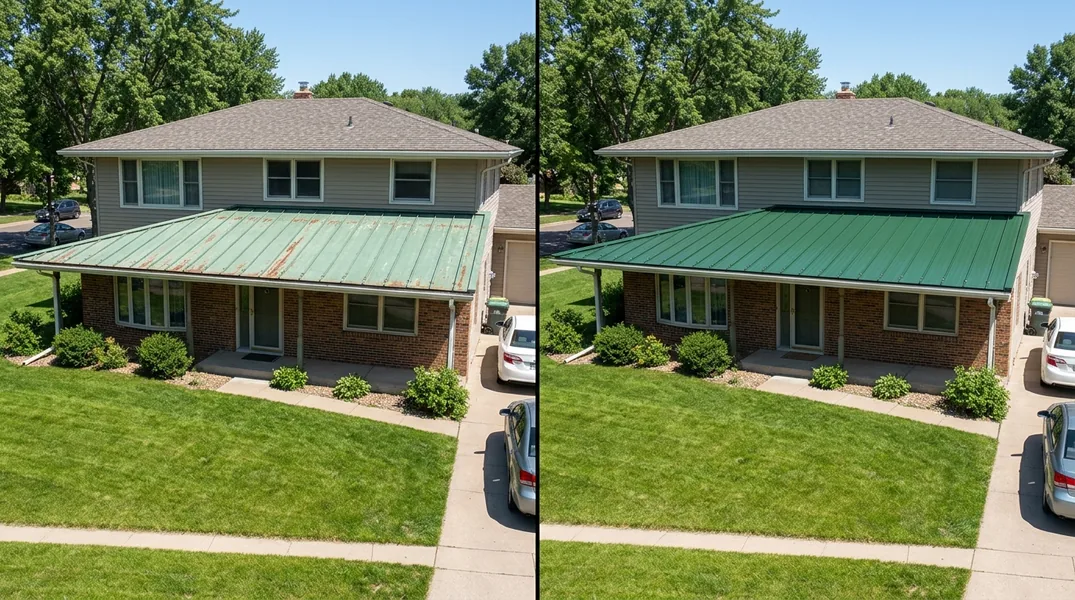
Metal roofing handles these conditions differently. The smooth surface sheds snow more readily, the panels do not absorb water, and the material expands and contracts predictably instead of cracking. That is why more homeowners in Minneapolis and across the Twin Cities are asking about metal roofs as a long-term solution rather than a cosmetic upgrade. Understanding how metal performs under snow load, ice dams, and freeze-thaw cycles will help you decide whether it is the right investment for your home.
Metal Roof Snow Load: Shedding Weight Before It Becomes a Problem
Snow load is the total weight of snow and ice sitting on your roof at one time. In Minnesota, building codes require roofs to support a significant snow load, but that does not mean every roof is safe in every storm. Older homes, roofs with multiple layers of shingles, and structures with sagging decking are especially vulnerable. Metal roofs help because their smooth, low-friction surface allows snow to slide off, especially on steeper pitches. That reduces the total weight your structure has to carry and lowers the risk of overloading.
It is important to understand that metal roofs do not magically eliminate snow load. On lower-slope roofs or during wet, heavy snowfalls, snow can still accumulate. The difference is that metal panels are strong and uniform, so they distribute weight evenly across the decking rather than concentrating it in low spots. When you request a free estimate, a professional can assess your roof pitch, structure, and snow load requirements to recommend the right panel profile and gauge. Proper installation matters as much as the material itself, which is why working with an experienced local crew is essential.
Ice Dam Prevention: How Metal Roofs Reduce the Risk
Ice dams form when heat escapes from your attic, melts snow on the roof, and the water refreezes at the colder eaves. That ice dam traps water, which then backs up under the roofing material and into your home. Asphalt shingles are especially vulnerable because their overlapping tabs create channels for water to seep through. Metal roofs reduce ice dam risk in two ways: they shed snow more quickly, and their interlocking panels and concealed fasteners create fewer places for water to enter. Standing seam panels, in particular, provide a continuous surface with raised seams that channel water away from the roof deck.
No roof is completely immune to ice dams if your attic is poorly insulated or ventilated, so the best approach combines a metal roof with proper attic air sealing and insulation. Still, homeowners in St. Paul and Minneapolis who have made the switch often report far fewer ice dam problems. If you are considering Standing Seam Metal Roofing, ask your installer about snow guards. These small brackets hold snow in place on steep roofs and prevent it from sliding off in a dangerous sheet, protecting your gutters, landscaping, and anyone walking below.
Freeze-Thaw Roof Damage: Why Metal Outlasts Asphalt
Freeze-thaw damage is the silent killer of Minnesota roofs. Water seeps into tiny cracks in asphalt shingles, freezes, expands, and widens those cracks. Over time, the shingle surface breaks down, granules wash away, and the roof becomes brittle. Metal roofing does not absorb water, so freezing temperatures do not cause the same internal damage. The panels expand and contract with temperature changes, but they do so as a designed system, with fasteners and seams that accommodate movement. A quality metal roof can last 40 to 70 years in this climate, compared with 15 to 25 years for asphalt.
That durability matters when you consider the full cost of roof ownership. Replacing an asphalt roof every couple of decades adds up, especially when you factor in repairs after harsh winters. Metal costs more upfront, but many homeowners find that the long-term savings and peace of mind justify the investment. If your current roof is showing signs of freeze-thaw damage, such as cracked shingles, missing granules, or leaks near the eaves, a Metal Roof Replacement may be more cost-effective than repeated repairs. Homeowners in Bloomington and Edina often start with a roof inspection to determine whether repair or replacement makes more sense.
Metal Roof Installation Near Me: Choosing the Right Local Crew
Not all metal roofs are installed the same way, and in a climate like ours, installation details matter enormously. Panel gauge, fastener type, underlayment, and ventilation all affect how well the roof performs under snow load and freeze-thaw cycles. A crew that installs metal roofs in milder climates may not understand Minnesota-specific requirements, such as ice barrier underlayment at the eaves and proper snow guard placement. That is why choosing a local installer with experience in Minneapolis winters is so important.
When you search for Metal Roof Installation near me, look for a company that specializes in metal rather than one that offers it as an add-on. Ask about their experience with standing seam and exposed-fastener panels, their warranty terms, and whether they can show you local references. A reputable installer will also discuss whether a Metal Roof Over Shingles (Retrofit) is appropriate for your home, which can save on tear-off costs but requires careful evaluation of your existing roof structure.
Metal Roof Cost in Minneapolis: What to Budget for Winter-Ready Protection
Homeowners often ask whether metal roofing is worth the added expense. The answer depends on your budget and how long you plan to stay in your home. Metal roofing typically costs more than asphalt upfront, but it lasts two to three times longer and requires less maintenance. In a climate with heavy snow and frequent freeze-thaw cycles, the durability advantage is even more pronounced. To get a sense of what your project might cost, you can review general pricing information, but keep in mind that every roof is different. Factors like roof complexity, panel type, and whether you need a tear-off will affect the final number.
The best way to get an accurate figure is to schedule an on-site assessment. A professional can evaluate your roof structure, discuss panel options, and provide a detailed quote that accounts for local snow load requirements and ice dam prevention measures. If you are ready to explore metal roofing for your Minneapolis home, call Minneapolis Metal Roofing at (612) 326-1892 or request a free estimate online. A winter-ready roof is an investment in your home's comfort, safety, and long-term value.
Looking for a professional metal roofing contractor in Minneapolis? Minneapolis Metal Roofing responds fast for all your metal roofing needs.
Get a Free QuoteOur services: Metal Roof Installation · Standing Seam Metal Roofing · Metal Roof Replacement